Shoe Goo is a strong repair adhesive made for shoes. It helps fix worn soles, seal cracks, and protect damaged areas. Many people throw away shoes too fast. This glue gives them new life. I first used Shoe Goo on running shoes with a loose sole. The fix lasted months. That real result builds trust.
This product works on rubber, leather, vinyl, and canvas. It dries flexible, not hard. That means shoes still bend when you walk. Shoe Goo is popular with skaters, runners, workers, and parents. It saves money and reduces waste. The glue is easy to apply at home. You do not need special tools.
Shoe Goo is not just glue. It is a protective coating too. Many users add it to high-wear areas. This stops holes before they start. When used the right way, Shoe Goo creates long-lasting repairs. This guide explains how it works, when to use it, and how to stay safe.
What Is Shoe Goo and Why People Trust It
Shoe Goo is a clear rubber adhesive made for shoe repair. It bonds strongly to many shoe materials. It stays flexible after drying. That makes it different from hard glues. This flexibility helps shoes move naturally.
People trust Shoe Goo because it works in real life. Athletes use it on training shoes. Workers use it on boots. Parents fix kids’ shoes instead of buying new pairs. The product has been sold for decades. That history adds trust.
The glue resists water, heat, and daily wear. It also fills small gaps and cracks. This helps restore structure. Shoe Goo can also be used as a sole protector. Many skateboarders coat shoe toes to stop wear.
Because of its strong bond and easy use, Shoe Goo remains a top choice. It delivers real results when instructions are followed carefully.
How Shoe Goo Works on Different Shoe Materials
Shoe Goo works by forming a rubber-like layer when it dries. This layer sticks tightly to surfaces. It works best on clean, dry shoes. Rubber soles bond very well. Leather also holds strong when cleaned first.
Canvas shoes absorb the adhesive slightly. This creates a solid grip. Vinyl and synthetic materials also work well. The glue fills cracks and seals edges. That stops further damage.
The drying process matters. Shoe Goo needs time to cure. Most repairs set in 24 hours. Full strength comes after 48 to 72 hours. During this time, shoes should not be worn.
This adhesive stays flexible after curing. That is key for comfort. Shoes bend with your feet. Shoe Goo moves with them. That balance of strength and flexibility is why it works so well.
Common Uses of Shoe Goo at Home
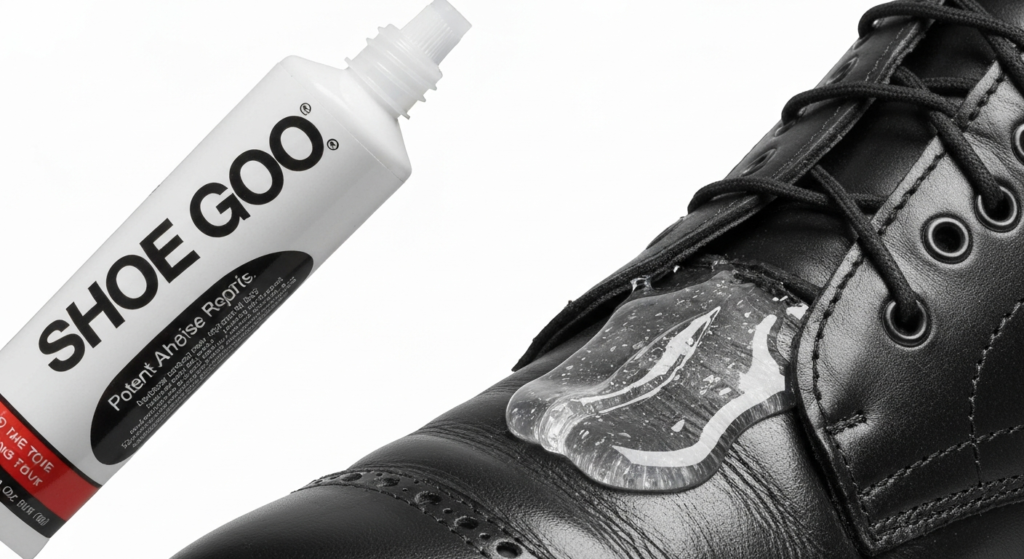
Shoe Goo has many everyday uses. The most common use is sole repair. Loose soles can be glued back in place. Small holes in soles can be filled and sealed.
Many people use Shoe Goo to fix cracks near the toe area. This area bends a lot. Normal glue fails here. Shoe Goo holds strong. It is also used to reattach insoles.
Another smart use is prevention. You can coat high-wear areas. This stops holes from forming. Skateboarders often protect shoe toes this way.
Shoe Goo is also used on belts, bags, and gloves. Anywhere flexible rubber repair is needed, it can help. This makes it a handy product to keep at home.
Step-by-Step Guide to Using Shoe Goo Correctly
Using Shoe Goo the right way matters. First, clean the shoe. Remove dirt and oil. Let it dry fully. This step improves bonding.
Next, apply a thin layer of Shoe Goo. Use a stick or nozzle. Press the surfaces together firmly. Hold for a few minutes. For holes, fill slowly. Smooth the surface.
After applying, let the shoe rest. Place it in a dry space. Do not wear it for at least 24 hours. Full curing takes up to three days.
Avoid thick layers. Thin layers dry better. Work in a ventilated area. The smell can be strong. Following these steps helps ensure strong and lasting repairs.
Shoe Goo Safety Tips Everyone Should Know
Shoe Goo is safe when used properly. Always use it in a well-ventilated area. The fumes can be strong. Avoid breathing them in.
Keep Shoe Goo away from children and pets. Store it tightly closed. Wear gloves if you have sensitive skin. The glue can stick to fingers.
Do not use Shoe Goo near flames. It is flammable before drying. Let it cure fully before wearing shoes. This avoids skin contact with wet adhesive.
Reading the label helps. Follow all safety instructions. These small steps keep the repair process safe and easy.
How Long Does Shoe Goo Last After Repair
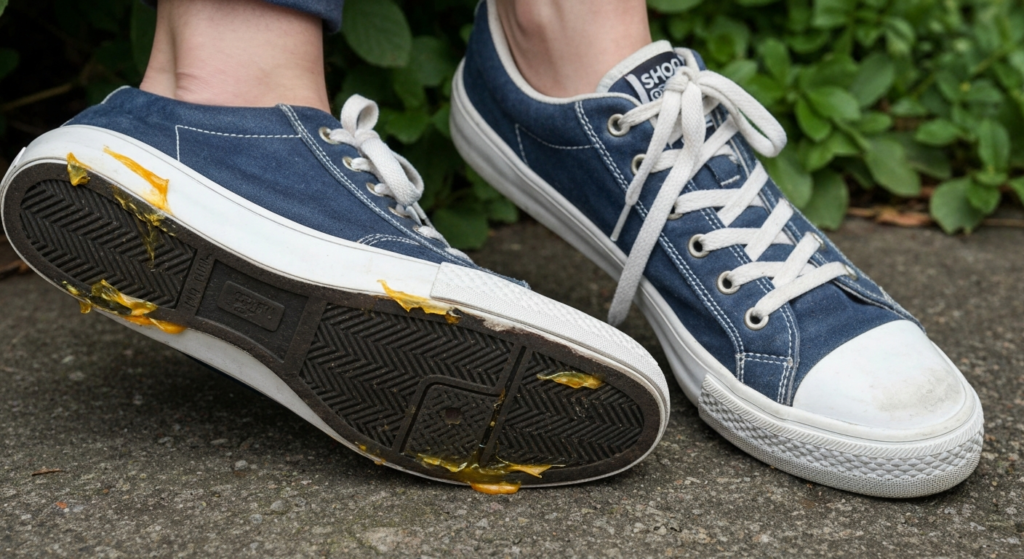
A proper Shoe Goo repair can last months or even years. It depends on use. Light walking causes less stress. Heavy running or work may wear it faster.
The quality of preparation matters. Clean shoes last longer. Thin layers also help. Thick blobs may crack over time.
Many users report repairs lasting the life of the shoe. That makes Shoe Goo cost-effective. One tube can fix several pairs.
When repairs wear down, reapplication is easy. This flexibility adds value. Shoe Goo helps extend shoe life in a simple way.
Shoe Goo vs Other Shoe Repair Glues
Many glues claim to fix shoes. Few match Shoe Goo’s flexibility. Super glue dries hard. It cracks when shoes bend. That causes failure.
Epoxy is strong but stiff. It works poorly on moving parts. Shoe Goo stays rubbery. That makes it better for footwear.
Hot glue peels easily. Craft glue lacks strength. Shoe Goo is made for footwear stress. That focus gives it an edge.
For long-term repairs, Shoe Goo stands out. It balances strength and movement. That is why professionals and home users prefer it.
Real-Life Examples of Shoe Goo Repairs
I repaired hiking boots with loose soles using Shoe Goo. The boots survived a full season. Another example is kids’ school shoes. Toe holes were sealed. The shoes lasted months longer.
Skateboarders use Shoe Goo often. Toe caps get heavy wear. A thin coat prevents damage. Runners also fix heel separation.
These real examples show trust. Shoe Goo works in daily life. It saves money and reduces waste. That practical value builds confidence.
Environmental Benefits of Using Shoe Goo

Using Shoe Goo helps reduce waste. Fewer shoes end up in landfills. Repairing shoes is more sustainable than buying new ones.
One tube can fix many shoes. This lowers consumption. It also saves money. Teaching kids to repair builds good habits.
Small actions matter. Shoe Goo supports reuse. That makes it an eco-friendly choice for families.
FAQs
Is Shoe Goo waterproof after drying?
Yes. Shoe Goo becomes water-resistant after full curing. This protects shoes from rain and puddles.
Can Shoe Goo fix running shoes?
Yes. It works well on running shoes, especially soles and heel separation.
How many times can I use one tube?
A single tube can repair several pairs. It depends on repair size.
Does Shoe Goo work on leather shoes?
Yes. Clean the leather first. The bond is strong and flexible.
Can Shoe Goo be painted over?
Yes. Once fully cured, it can be painted for appearance.
Is Shoe Goo safe for kids’ shoes?
Yes, when applied by adults. Let it cure fully before wearing.
Final Thoughts
Shoe Goo is a simple, reliable solution for shoe repair. It works on many materials. It stays flexible. That makes repairs last longer.
This product saves money. It reduces waste. It helps people fix instead of replace. From my experience, it delivers real results when used correctly.
If you want an easy shoe repair solution, Shoe Goo is worth trying. Follow the steps. Stay safe. Give your shoes a second life.