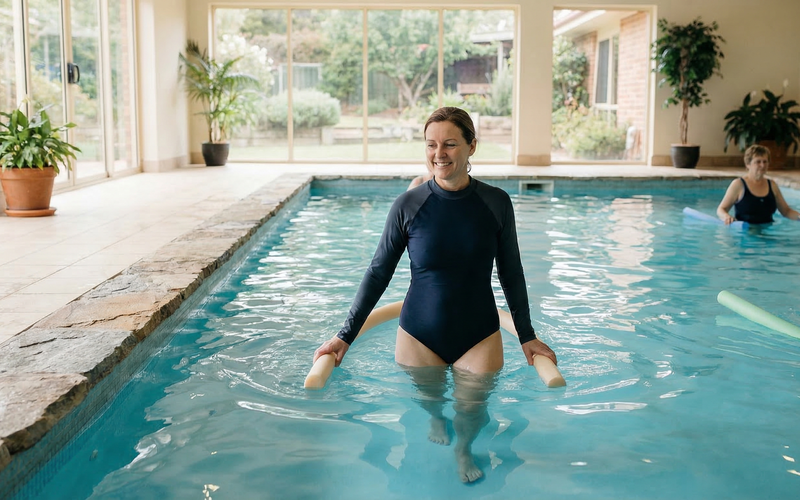

For many people, staying active is not always simple. Joint discomfort, stiffness, reduced mobility, or recovery needs can make land-based exercise feel difficult. High-impact movement may place too much stress on the knees, hips, ankles, or lower back. When that happens, people often look for a gentler way to move. This is one reason water therapy is often chosen for low-impact movement and joint support.
Water creates a different movement environment from land. It supports the body, reduces loading on joints, and adds gentle resistance at the same time. This combination makes it useful for people who want to stay active without the same level of stress that many land exercises can create. In both rehabilitation and general wellness settings, water-based movement is valued because it can make exercise feel more manageable, more comfortable, and easier to maintain.
What Water Therapy Means
Water therapy is a broad term for therapeutic activity or treatment that uses water to support movement, comfort, or recovery. It may include guided exercise in a pool, basic movement in warm water, or structured physical therapy in an aquatic setting. In some cases, the focus is rehabilitation. In others, it is general mobility, fitness, or symptom support.
The term is often used because it feels simple and easy to understand. It describes an approach where water is part of the therapeutic setting. That setting can help reduce the physical demands of movement while still allowing the body to work.
For people with joint concerns, this matters. Exercise is often important for strength, function, and mobility. But if movement feels painful or too demanding, it may be hard to stay consistent. Water can help bridge that gap.
Why Low-Impact Movement Matters
Low-impact movement refers to activity that places less force on the joints. This does not mean the exercise is ineffective. It simply means the body is not absorbing the same repeated impact that can come from running, jumping, or certain forms of fast land training.
Many people benefit from low-impact movement. This includes older adults, people with arthritis, those recovering from injury, individuals with higher body weight, and anyone who finds hard surfaces uncomfortable during exercise. In these cases, a lower-impact setting may make movement more accessible and more sustainable.
Water is especially useful here because it changes how body weight is carried. A person who feels limited on land may feel much freer in water. That shift can make a major difference in how willing and able someone is to move.
How Water Supports the Body
One of the main reasons water is chosen for joint support is buoyancy. Buoyancy is the upward force that makes the body feel lighter in water. The deeper the immersion, the less body weight the joints may need to carry.
This can reduce stress on weight-bearing areas such as the knees, hips, and spine. For people with discomfort during standing or walking, this supported feeling may make movement easier to begin. Simple actions such as walking, lifting the legs, or changing direction may feel less demanding in water than they do on land.
This lighter feeling does not remove all effort. Instead, it changes the kind of effort required. The joints may feel less pressure, while the muscles still have to work.
Water Adds Gentle Resistance
Water does more than support the body. It also resists movement. Every step, arm sweep, or leg lift has to push through water. This creates natural resistance in all directions.
That is one reason water-based movement can support strength and endurance without requiring heavy equipment. Slow movement feels gentle. Faster movement becomes more challenging. This makes the environment flexible. A person can start at a low level and increase effort gradually.
For joint support, this is helpful because the muscles around the joints often need strengthening. Better muscular support may improve movement quality and stability. Water allows people to work on that support in a way that often feels smoother and more controlled than land-based exercise.
Warm Water and Comfort
Temperature can also play an important role. Warm water is often chosen because it feels soothing and can help reduce the sense of stiffness. Many people report that movement feels easier in warm water than in cooler conditions. This may be especially true in the morning, after long periods of sitting, or when joints feel tight.
Warm water is commonly used in pool-based mobility sessions, gentle exercise classes, and simple home routines. It is not only the heat itself that matters. The combination of warmth and buoyancy often creates a more comfortable environment for movement.
This is one reason water therapy is often associated with joint support. It does not depend on a single feature. It works through support, resistance, and temperature together.
Why It Is Often Chosen for Joint Support
Joint support is not only about reducing pain. It is also about helping people move in a way they can continue over time. Water-based movement is often chosen because it may support several important goals at once.
First, it can reduce joint loading during activity. This may make exercise feel more approachable.
Second, it allows controlled movement. Water slows motion down and gives people more time to adjust balance and coordination.
Third, it can help people build strength without the same pounding effect that some land exercise creates.
Fourth, it may support confidence. When people feel safer and more comfortable, they are often more willing to keep moving.
This matters because consistency is one of the most important parts of any movement routine. Even a well-designed plan is not useful if a person cannot stick with it. Water often helps people stay engaged because the exercise feels more tolerable.
Who May Benefit From This Approach
Water-based movement may be useful for many kinds of people. It is often chosen by:
- people with arthritis or joint stiffness
- those recovering from surgery or injury
- older adults who want gentler movement
- people with back, hip, or knee discomfort
- individuals seeking low-impact exercise for general wellness
- people who feel less comfortable with high-impact activity
This does not mean every person should use the same routine. Some may benefit from guided sessions. Others may prefer simple pool walking or gentle range-of-motion work. The right approach depends on the person, their goals, and their comfort level.
Home Wellness and Everyday Movement
Water-based movement is not limited to clinical rehabilitation. It is also used in home and community wellness settings. Some people choose it because it feels easier than gym-based exercise. Others enjoy the calm and supportive environment.
Even simple movement in water can be valuable. Walking in a pool, lifting the arms slowly, or doing gentle mobility work may help people stay active in a practical way. In home wellness, the goal is often not intense training. It is regular movement that feels sustainable.
This is one reason water exercise is often easier to keep up with than more demanding routines. It can feel less intimidating. It can also be adapted to different ages and activity levels.
A Balanced and Practical Option
Water therapy should not be described as a cure-all. It is not the perfect choice for every person or every condition. Some people may need supervision. Others may have medical concerns that require guidance before starting. Safety always matters, especially for people with heart conditions, balance problems, open wounds, or strong fear of water.
Still, water-based movement remains a practical option for many people because it meets a real need. It offers a gentler path into activity. It can support movement when land-based exercise feels too hard. And it provides a setting where joint support and muscular effort can work together.
Final Thoughts
Water therapy is often chosen for low-impact movement and joint support because water changes the exercise experience in helpful ways. Buoyancy reduces loading. Resistance supports strength. Warmth may improve comfort. Together, these qualities create a movement environment that many people find more manageable than land-based activity.
For people who want a gentler way to stay active, support mobility, or reduce stress on the joints, water-based movement can be a valuable option. It is simple in concept, flexible in practice, and often easier to continue over time. That is why it remains such a widely chosen approach in both rehabilitation and everyday wellness.